

Papaya Market Estimated to Reach USD 26.93 Billion by 2035 Due to Rising Demand for Fresh and Processed Products
Papaya Market
Papaya market is growing steadily, driven by health awareness, functional foods, and nutraceutical demand, with rising global use in fresh and processed forms.
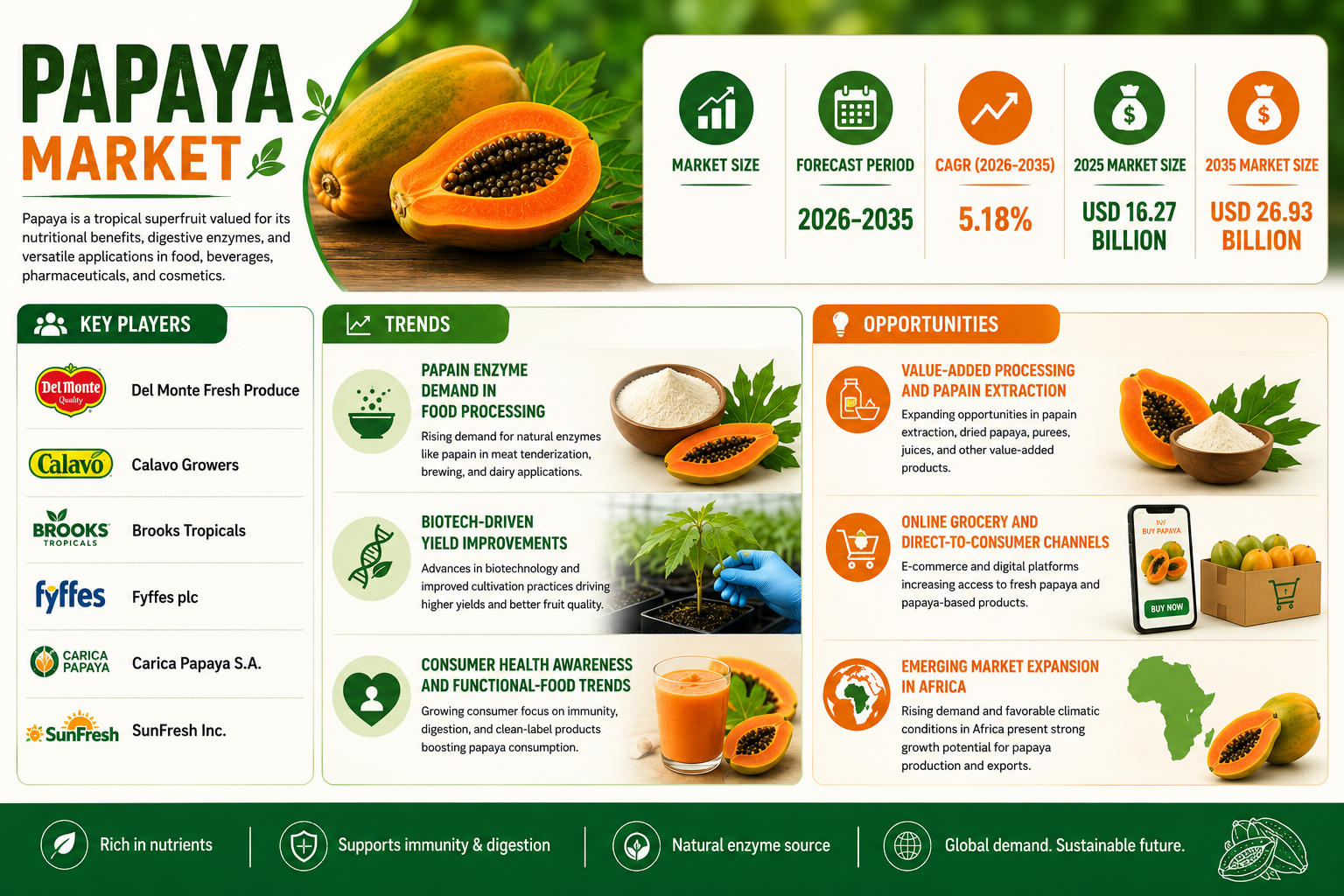
NEW YORK, NY, UNITED STATES, June 23, 2026 /EINPresswire.com/ -- The global Papaya Market is expected to witness strong growth over the next decade, supported by rising consumer awareness of nutritional health, increasing demand for tropical fruits, and the expanding use of papaya in nutraceuticals and dietary supplements. As consumers continue to prioritize natural, nutrient-rich food products, papaya has gained significant importance because of its high vitamin content, digestive benefits, antioxidant properties, and wide applicability across food, beverage, pharmaceutical, and personal care industries.Industry estimates show that the global papaya market was valued at USD 16.27 billion in 2025 and is projected to reach USD 26.93 billion by 2035. This growth reflects a compound annual growth rate (CAGR) of 5.18% during the forecast period from 2026 to 2035, driven by increasing consumption in fresh fruit markets, food processing, pharmaceutical applications, and dietary supplement formulations.
Market Overview:
Papaya is one of the most widely cultivated tropical fruits in the world and is valued for both its nutritional profile and commercial versatility. Rich in vitamins A, C, and E, dietary fiber, antioxidants, and digestive enzymes such as papain, papaya has become increasingly popular among health-conscious consumers who are looking for fruits that offer both taste and wellness benefits. The fruit is consumed fresh, processed into juices and concentrates, incorporated into functional food products, and used in cosmetic and pharmaceutical formulations, making it a highly adaptable commodity in global markets. As awareness of preventive healthcare and nutrition-focused lifestyles continues to rise, demand for papaya has expanded beyond traditional consumption patterns, with papaya-derived ingredients now being used in nutraceutical supplements, enzyme preparations, skincare products, and functional beverages, thereby creating new revenue opportunities across the value chain.
Health Awareness:
One of the strongest drivers of the papaya market is the growing global emphasis on health and wellness, as consumers become more aware of the role nutrition plays in maintaining long-term health and reducing the risk of chronic diseases. Papaya’s naturally occurring antioxidants, vitamins, and digestive enzymes have made it a preferred choice for individuals seeking healthier dietary options, and the fruit is widely associated with digestive support, immune enhancement, and overall wellness. The increasing prevalence of lifestyle-related conditions such as obesity, digestive disorders, and cardiovascular concerns has encouraged consumers to include more nutrient-dense foods in their daily diets, which has contributed to rising papaya consumption in both developed and emerging economies. In addition, healthcare professionals and nutrition experts frequently recommend fruits rich in vitamins and antioxidants as part of balanced dietary patterns, further strengthening demand for papaya in the global market.
Functional Foods:
The rapid expansion of the functional food sector is creating favorable opportunities for papaya producers and processors, as consumers increasingly seek products that provide benefits beyond basic nutrition. Papaya is being incorporated into a wide range of functional food products, including smoothies, fruit blends, fortified beverages, nutrition bars, and wellness snacks, with manufacturers leveraging the fruit’s natural nutrient profile to develop offerings that support digestive health, immunity, and overall wellness. The clean-label movement has also supported market growth, as consumers continue to prefer products made with natural ingredients rather than synthetic additives, and papaya aligns well with this preference due to its recognizable origin and health-oriented image. As the functional food industry continues to expand globally, papaya-based ingredients are expected to see sustained demand throughout the forecast period.
Download Free Sample PDF Copy : – Access A Complimentary Copy of Our Report to Explore Its Content and Insights
https://www.marketresearchfuture.com/sample_request/22634
Nutraceutical Growth:
Among all application segments, nutraceuticals and dietary supplements are expected to record the strongest growth during the forecast period, expanding at a CAGR of 6.57%. This growth is being driven by the increasing popularity of preventive healthcare, which is encouraging consumers to invest in supplements that support immunity, digestive health, and overall wellness. Papaya extracts, powders, concentrates, and enzyme formulations are gaining traction in supplement manufacturing because of their nutritional and functional properties, while the presence of papain, a natural digestive enzyme derived from papaya, has generated considerable interest in the nutraceutical industry. Papain is widely used in digestive health supplements and enzyme-based formulations designed to improve nutrient absorption and gastrointestinal function. At the same time, the rising demand for plant-based wellness products is creating additional opportunities for papaya-derived ingredients, as consumers increasingly turn to botanical and fruit-based supplements as natural alternatives to synthetic health products.
Trade and Distribution:
International trade has become an important factor supporting the growth of the papaya market, as improvements in transportation infrastructure, cold-chain logistics, and distribution systems have significantly enhanced the movement of fresh papaya across global markets. Export-oriented producing countries are benefiting from rising demand in regions where domestic cultivation remains limited, while improved post-harvest handling technologies and preservation techniques have helped reduce product losses and maintain quality during transit. Retail modernization is also contributing to market expansion, with supermarkets, hypermarkets, specialty fruit retailers, and online grocery platforms increasing consumer access to both fresh and processed papaya products. The growth of digital commerce channels has further expanded market reach by enabling producers and distributors to connect directly with consumers across wider geographic regions, thereby strengthening the overall supply and demand ecosystem.
Technology:
Technological innovation is transforming papaya cultivation practices around the world, as modern farming techniques, precision agriculture solutions, improved irrigation systems, and advanced disease management practices help growers improve productivity and fruit quality. Agricultural research institutions and commercial growers are investing in improved varieties that offer higher yields, better resistance to pests and diseases, and longer shelf life, which is contributing to more stable production levels and stronger market supply. Processing technologies are also advancing rapidly, with improved drying, extraction, concentration, and packaging methods enabling manufacturers to create higher-value papaya products with extended shelf life and better nutritional retention. These innovations are expected to improve profitability across the value chain while supporting long-term market growth and product diversification.
Consumer Trends:
The shift toward natural and plant-based consumption patterns is creating highly favorable market conditions for papaya products, as modern consumers increasingly scrutinize ingredient labels and seek products derived from recognizable natural sources. Papaya fits well within this trend because of its natural origin, nutritional value, and versatility, and food manufacturers, beverage companies, cosmetic brands, and supplement producers are incorporating papaya-derived ingredients into their portfolios to meet changing consumer preferences. The growing popularity of vegan and plant-based lifestyles is also expanding demand for fruit-derived ingredients, and as consumers move away from heavily processed products, naturally sourced fruits such as papaya are expected to gain even greater market acceptance in the years ahead.
Challenges:
Despite its strong growth outlook, the papaya market faces several operational and environmental challenges that could affect production and supply stability. Climate variability remains a major concern for growers because papaya cultivation is highly sensitive to weather conditions such as temperature fluctuations, excessive rainfall, droughts, and extreme climatic events, all of which can influence yield quality and production volumes. The market also faces challenges related to pests and diseases, which can reduce crop productivity and increase cultivation costs, making it essential for growers to invest continuously in agricultural management practices. In addition, price volatility and supply chain disruptions can affect market stability, as variations in production output and transportation costs may influence pricing structures across global markets. Addressing these challenges through innovation, sustainable farming practices, and improved logistics will be essential for ensuring long-term industry growth.
Market Segmentation: By Form
Fresh Papaya:
Fresh papaya represents the largest segment of the market, driven by strong consumer demand for nutritious and naturally sourced fruits. Its widespread availability through retail and fresh produce channels continues to support market growth.
Dried Papaya:
Dried papaya is gaining popularity as a convenient and healthy snack option. Growing demand for fruit-based snacks, trail mixes, and ready-to-eat products is contributing to the expansion of this segment.
Processed Products: (Juice, Puree, and Concentrate)
The processed products segment is witnessing strong growth due to increasing use in beverages, food processing, and nutraceutical applications. Rising demand for papaya-based ingredients and papain extraction is further supporting the segment's development.
Regional Outlook:
North America represents a significant market for papaya consumption, supported by rising consumer awareness of healthy eating habits and growing demand for tropical fruits, while the region is also witnessing increasing adoption of functional foods and dietary supplements containing fruit-derived ingredients. Europe continues to experience growing demand for nutrient-rich fruits and clean-label products, as health-conscious consumers across the region increasingly incorporate tropical fruits into their diets, creating favorable opportunities for papaya imports and value-added products. Asia-Pacific is expected to emerge as one of the fastest-growing regional markets during the forecast period, driven by rising disposable incomes, expanding urban populations, and increasing health awareness, while several countries in the region also serve as major production hubs that support both domestic demand and export activities. Latin America remains an important production center because of its favorable climatic conditions and established agricultural infrastructure, and it continues to play a critical role in global supply chains. The Middle East and Africa are also gradually witnessing increased demand as consumers become more aware of nutritional wellness and access to imported fruits improves.
Future Outlook:
The outlook for the global papaya market remains highly positive through 2035, as growing interest in health-focused nutrition, expanding functional food applications, and increasing demand for natural ingredients are expected to support sustained market growth. The rapid expansion of nutraceuticals and dietary supplements presents especially attractive opportunities for producers and ingredient manufacturers, while continued investment in agricultural innovation, processing technologies, and supply chain improvements will further strengthen industry development. As consumers increasingly prioritize wellness, immunity support, digestive health, and plant-based nutrition, papaya is expected to maintain its position as an important fruit category within the global food and health industries. With market value projected to rise from USD 16.27 billion in 2025 to USD 26.93 billion by 2035, the global papaya industry is well positioned to capitalize on evolving consumer preferences and emerging opportunities across food, beverage, nutraceutical, and wellness sectors.
FAQs
1. What is driving the growth of the global papaya market?
The market is growing due to rising health awareness, stronger demand for tropical fruits, and wider use of papaya in functional foods, nutraceuticals, and dietary supplements.
2. Which segment is expected to grow the fastest in the papaya market?
Nutraceuticals and dietary supplements are expected to grow the fastest, with a projected CAGR of 5.18% during the forecast period.
3. Which regions are expected to show strong demand for papaya in the coming years?
North America and Europe are expected to maintain strong demand, while Asia-Pacific is likely to be one of the fastest-growing regions due to rising incomes, urbanization, and health awareness.
Read Our Related Research Report:
Banana Powder Market:
https://www.marketresearchfuture.com/reports/banana-powder-market-21731
Passion Fruit Market:
https://www.marketresearchfuture.com/reports/passion-fruit-market-22704
Lychee Market :
https://www.marketresearchfuture.com/reports/lychee-market-25137
Berrie Market:
https://www.marketresearchfuture.com/reports/berrie-market-25076
Apple Powder Market:
https://www.marketresearchfuture.com/reports/apple-powder-market-40539
Sagar Kadam
Market Research Future
+1 628-258-0071
email us here
Visit us on social media:
LinkedIn
Facebook
X
Legal Disclaimer:
EIN Presswire provides this news content "as is" without warranty of any kind. We do not accept any responsibility or liability for the accuracy, content, images, videos, licenses, completeness, legality, or reliability of the information contained in this article. If you have any complaints or copyright issues related to this article, kindly contact the author above.
